There's a moment that happens to almost everyone who makes a vision board the traditional way.
You sit down with a stack of magazines, a pair of scissors, and good intentions. You find a photo of a beach house. A photo of someone crossing a finish line. A photo of a couple holding hands in a field. You glue them down, step back, and look at what you've made.
And something feels... off.
The images are beautiful. The goals are real. But the people in the photos aren't you. The house isn't your house. The couple isn't your relationship. Your conscious mind knows what these images represent, but your subconscious isn't buying it. There's a gap between the vision and the visceral belief that this is my life — and that gap is where most vision boards quietly stop working.
This is the problem that AI vision board technology was built to solve.
What Is an AI Vision Board?
An AI vision board uses artificial intelligence image generation to create custom, photo-realistic visuals for your board — including images of you living the life you're designing.
Instead of searching for a stock photo of "someone in a corner office" and hoping your brain fills in the blanks, an AI vision board tool can generate an image of you in that office: your face, your posture, your energy — seated at the desk of the company you're building, or accepting an award you haven't won yet, or standing at the door of the home you haven't bought yet.
The difference isn't cosmetic. It's neurological.
Why Personalized Images Are More Powerful Than Stock Photos
Your Brain Knows the Difference
Your Reticular Activating System — the neural network responsible for filtering what reaches your conscious attention — responds most strongly to stimuli it recognizes as personally relevant. This is why you hear your name across a crowded room. It's why you notice your car model on every highway after you buy it.
The same principle applies to vision board imagery. When your brain sees a stock photo of a stranger on a yacht, it processes the image as information: someone else, somewhere else, doing something. When it sees a realistic image of you on that yacht, the processing shifts. Your brain begins treating the scene as a rehearsal of your own future. The RAS starts tagging it as relevant, important, worth watching for.
Research in motor imagery and visualization has consistently shown that first-person imagery — seeing goals from your own perspective, starring you — creates stronger neural activation than third-person imagery of other people doing the same thing. A vision board filled with images of yourself achieving your goals isn't just more motivating. It's more neurologically effective.
The Identity Bridge
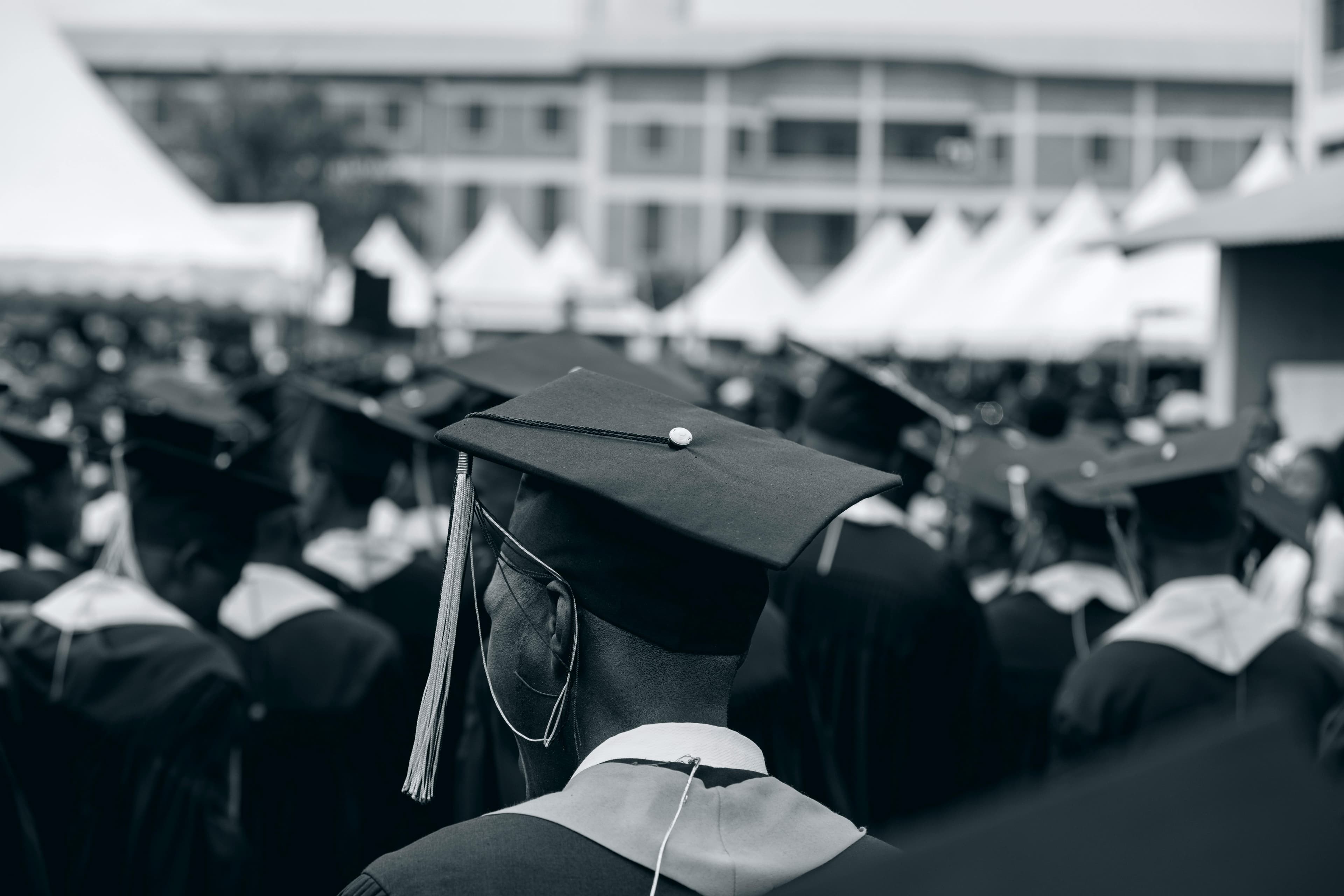
Here's the deeper psychology. Your brain is constantly comparing your current reality with the identity you hold of yourself. If the person on your vision board looks like a slightly evolved version of you — you in a cap and gown, you with a marathon medal, you holding your baby for the first time — the gap between "who I am" and "who I'm becoming" feels small enough to cross. Your subconscious says, That's just the next chapter.
But if every image on your board is a stranger living a life that doesn't look like yours, a subtle disconnect takes root. The subconscious doesn't rebel loudly — it just stops engaging. The board becomes wallpaper. The goals become abstractions.
AI-generated personal imagery closes that gap. It puts you in the scene, and that changes the entire neurological conversation.
Smart Techniques for AI Vision Board Images
Custom image generation is powerful, but there's an art to using it well. A few approaches can make your AI-generated images significantly more emotionally effective.
For Relationship Goals: Use Cinematic Scenes, Not Portraits
If you want to manifest a loving relationship but don't have a strong mental image of your future partner — their hair color, their features, the specifics — generating an image of yourself standing next to an AI-created stranger can feel hollow.
A better approach: choose a scene from a movie that strikes you as powerfully romantic. A couple slow-dancing in a kitchen. Walking through autumn leaves. Sitting together on a fire escape watching the city at night. That cinematic reference will evoke the feeling of being in love — the warmth, the safety, the aliveness — far more than a posed portrait ever could. And it's the feeling that programs your RAS, not the face.
For Family Goals: Try the "From Behind" Angle
AI image generation has improved dramatically, but occasionally faces can land in uncanny valley territory — close enough to be recognizable but just different enough to feel strange. For goals involving your future family, there's an elegant workaround that sidesteps this entirely.
Have the image show you and your family from behind: holding hands walking down Main Street at Disney World, waving from the balcony of a house on the lake, pushing a stroller through a sunlit park. Your brain registers the scene as you and yours — the body language, the togetherness, the environment all read as authentic — without getting tripped up by facial details. It's a small creative choice that makes a significant psychological difference.
For Career and Achievement Goals: Go Specific
The more specific the scene, the more your brain believes it. Don't just generate "me in a nice office." Generate you in a lab coat with a stethoscope. You at a podium with a specific company logo behind you. You signing a book at a table stacked with copies. The details tell your subconscious this isn't a vague aspiration — it's a plan.
The Problem With Most Vision Board Tools
Search "vision board maker" online and you'll find dozens of options: Canva, Miro, Milanote, PicMonkey, Fotor, Venngage. They all do roughly the same thing — give you a blank digital canvas, a stock photo library, and some drag-and-drop tools.
None of them solve the three problems that actually determine whether a vision board works:
Problem 1: No clarity process. These tools assume you already know exactly what you want. You don't get prompts, reflective exercises, or any guidance on identifying your goals before you start choosing images. The result is a board that looks good but lacks the intentional foundation that makes it neurologically effective.
Problem 2: No personalized imagery. Stock photo libraries are fine for blog headers. They're inadequate for a tool meant to reprogram your subconscious. Without images of you in your desired future, the board remains someone else's dream.
Problem 3: The board stays digital. A digital board lives on a screen you unlock 50 times a day and scroll past without pausing. The neuroscience is clear: repeated, sustained visual exposure in your physical environment is what activates your RAS and drives neuroplastic change. A JPEG on your phone doesn't deliver that.
And then there are the tools that do ship a physical board — but the product that arrives is a poster. An unframed, rolled-up poster that you need to find a way to mount, frame, or tape to a wall. It might be fine for a college dorm room, but it's not something you'd proudly display in your living room, your office, or your bedroom. And if you're not proud of how it looks, you're less likely to put it somewhere prominent — which means less viewing time, which means less neurological impact.
Your vision board should be something you're drawn to look at, not something you tolerate on your wall.
What a Complete AI Vision Board Experience Looks Like
The ideal AI vision board platform doesn't just hand you a canvas and wish you luck. It walks you through a complete process:
1. Clarity first. Before you touch a single image, you work through a structured course that helps you identify what you actually want — across career, relationships, health, finances, spirituality, and personal growth. This isn't a quiz. It's a multi-module process that builds genuine insight before you start building.
2. Images that feel like yours. You choose from three sources: a curated library of 20,000+ beautiful, high-quality images organized by goal and life area. Your own personal photos uploaded directly. And a custom image generation tool that creates photo-realistic scenes of you having already achieved your goals.
3. A builder designed for this purpose. Not a generic graphic design tool repurposed for vision boards. A drag-and-drop builder designed specifically for vision board creation — with guided category prompts, intelligent layouts, and an interface built around the experience of designing your future.
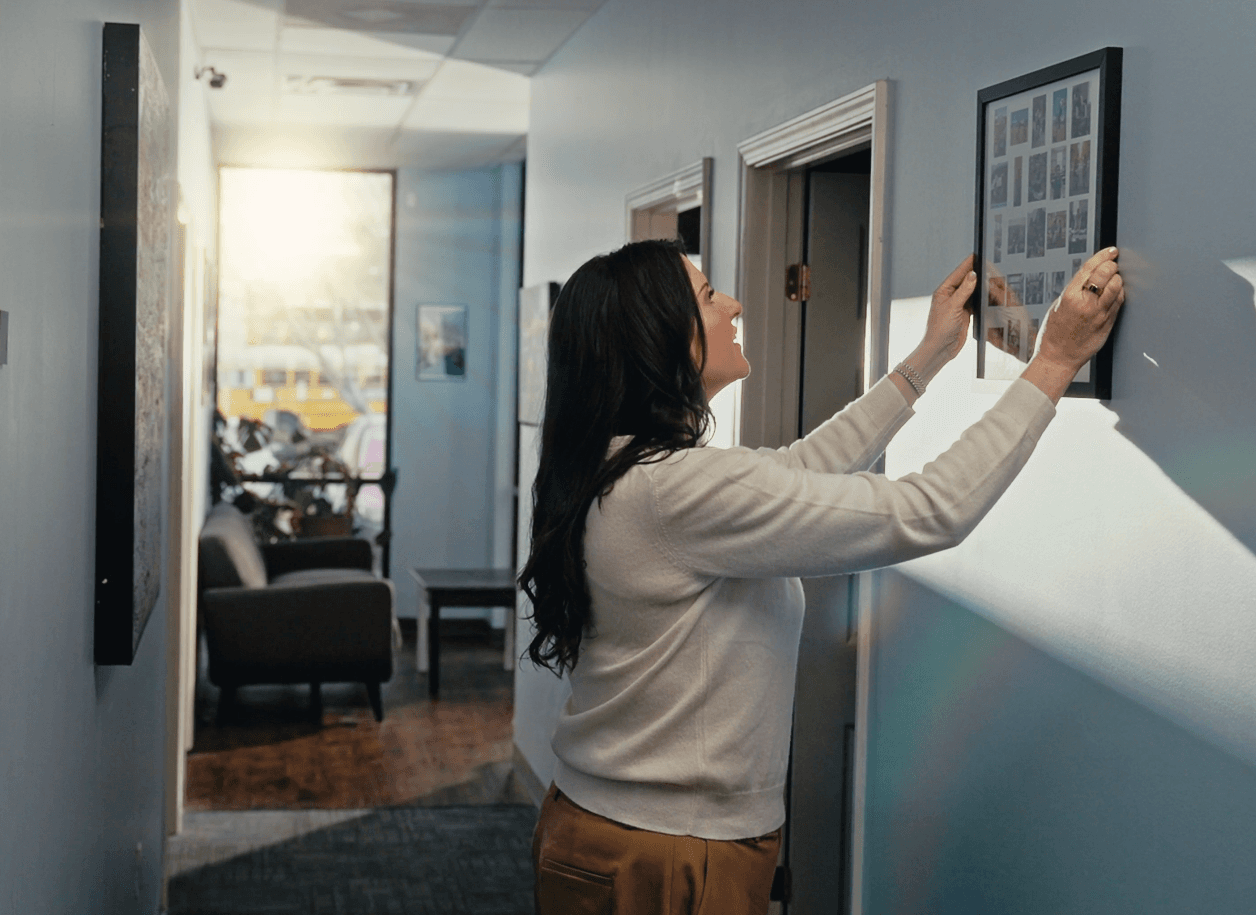
4. A board you're proud to display. This is where most platforms fall short. The best vision board experience doesn't end with a download link. It ends with a premium physical board — printed on archival-quality materials, wood-framed, and shipped to your door ready to hang. Something that belongs on the wall of your bedroom, your office, your meditation space. Something that looks like it matters, because it does.
This is exactly what Vistara Board was built to deliver. It's the only platform that combines all four elements — a 16-module Clarity Course, AI custom image generation, a 20,000+ curated image library with personal photo uploads, and a premium physical board printed and shipped to your door — in one seamless experience you never have to leave.
The Founders' Vision and Achiever's Edge packages include wood-framed boards that arrive ready to hang. Not posters. Not rolled-up prints. Framed, gallery-quality vision boards designed to earn a permanent place in your daily environment — because that permanent place is where the neuroscience actually works.
AI Vision Boards and the Science of Manifestation
For those drawn to the philosophy of manifestation — the teachings of Bob Proctor, Abraham Hicks, Wallace Wattles, Eckhart Tolle, Napoleon Hill — AI vision board technology represents something remarkable: the point where ancient wisdom and modern capability converge.
The core teaching across all of these traditions is the same: clarity of vision, sustained emotional alignment with your desired reality, and the faith to act as if the outcome is already unfolding. A vision board has always been the physical expression of that practice.
What AI image generation adds is precision. Instead of approximating your future with someone else's photographs, you can now see your own face in the life you're calling in. The emotional alignment these traditions describe — feeling your future as if it's happening now — becomes dramatically easier when the image looking back at you from the board is you.
This isn't about technology replacing the inner work. It's about technology amplifying it. The intention is still yours. The clarity is still yours. The alignment is still yours. The AI simply makes the mirror more accurate.
Frequently Asked Questions About AI Vision Boards
Can AI really create realistic images of me achieving my goals? Yes. Modern AI image generation can produce photo-realistic scenes based on reference photos you provide. The technology has advanced to the point where the images are emotionally compelling and recognizable — though like any tool, some experimentation with angles and scenes produces better results than others. (See the tips above on cinematic scenes and "from behind" angles.)
Is an AI vision board better than a traditional one? It's not either/or. The best vision boards combine personal photos, curated images, and AI-generated images. The AI component adds the element most traditional boards lack: you in the picture. Combined with daily viewing of a physical board, this creates the strongest possible neurological effect.
Do I need to be tech-savvy to use AI image generation for my vision board? Not at all. Platforms like Vistara Board have integrated the image generation directly into the board-building experience. You describe the scene you want, provide a reference photo, and the tool creates the image for you. No design skills, no separate apps, no technical knowledge required.
Should my AI vision board be digital or physical? Physical, whenever possible. The neuroscience of value tagging, RAS activation, and environmental priming all favor a board that lives in your physical space and delivers repeated visual exposure throughout the day. A digital version makes a good supplement — as a phone wallpaper or desktop background — but the physical board is where the deep work happens.
How often should I look at my AI vision board? Daily. Even two to five minutes of intentional morning viewing is enough to prime your Reticular Activating System for the day. Consistency matters more than session length. The brain assigns higher importance to images it encounters repeatedly — so a board you see every morning for two minutes is more effective than one you stare at for an hour once a month.
The Bottom Line
The old way of making a vision board — magazines, scissors, glue stick, cardboard — served its purpose. It got people thinking about their goals. It put images in front of their eyes.
But it also left a gap. The people in the photos weren't you. The board itself was fragile, informal, and easy to stuff in a closet. The process had no structure, no guidance, and no science behind the image selection.
AI vision board technology closes every one of those gaps. It puts your face in your future. It pairs the imagery with a clarity process that ensures you're visualizing what you actually want. And when the finished product is a framed, gallery-quality board hanging in your daily environment — not a poster, not a JPEG, not a Pinterest folder — the neuroscience of visualization finally has the delivery system it deserves.
Your brain is ready to believe in your future. Give it an image worth believing.
Vistara Board is the only platform that combines a 16-module Clarity Course, AI custom image generation, a 20,000+ curated image library, and a premium framed physical board shipped to your door. Start with the free Clarity Course preview and see what's possible.
Related Reading:
- The Ultimate Guide to Vision Boards: How to Make a Vision Board That Actually Works
- Vision Boards for Athletes: How Elite Performers Use Visualization (coming soon)
- The Science of Manifestation: What Neuroscience Says About the Law of Attraction (coming soon)
- Vision Board Printing: Why the Physical Board Changes Everything (coming soon)
© Vistara Board. All rights reserved.